


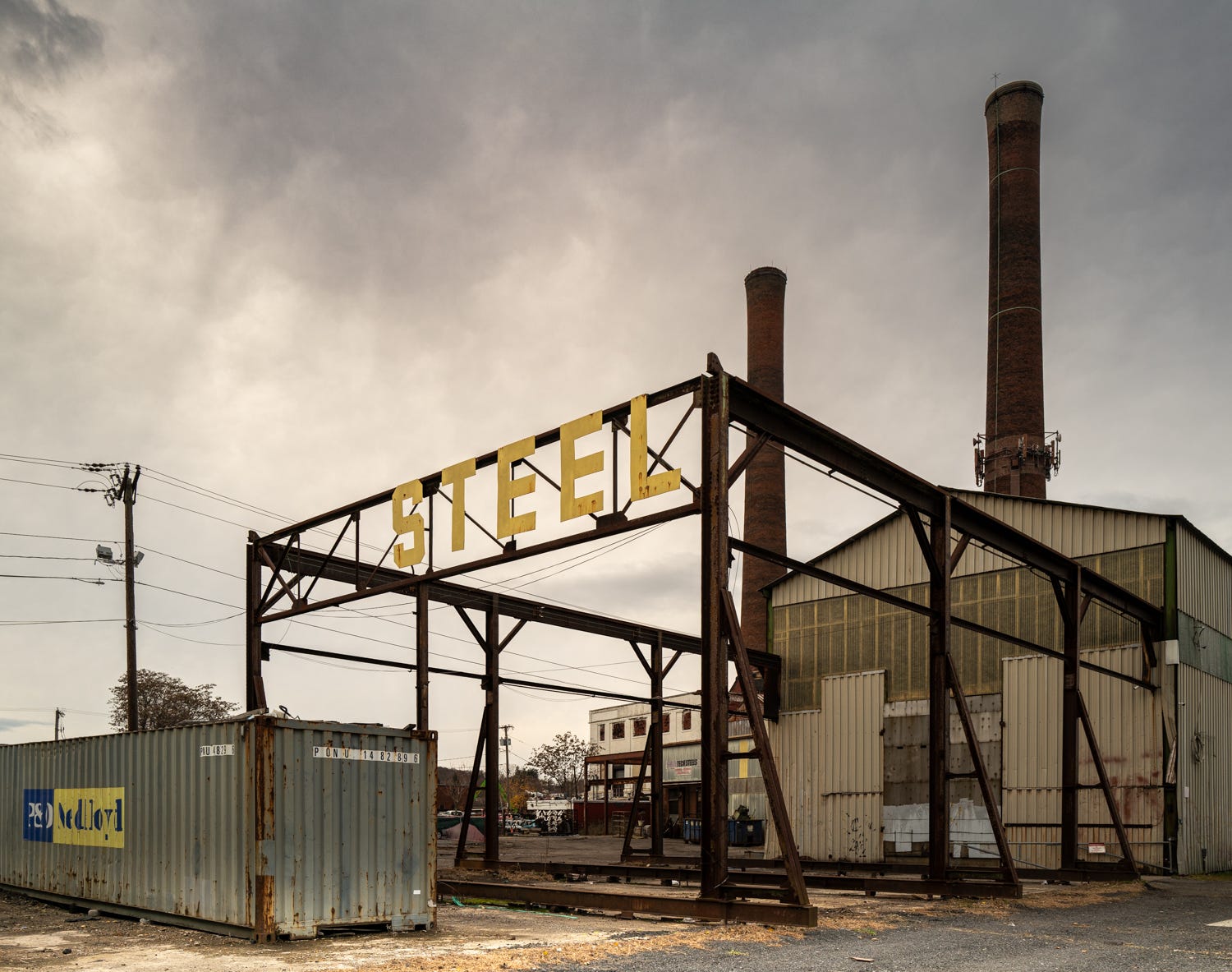
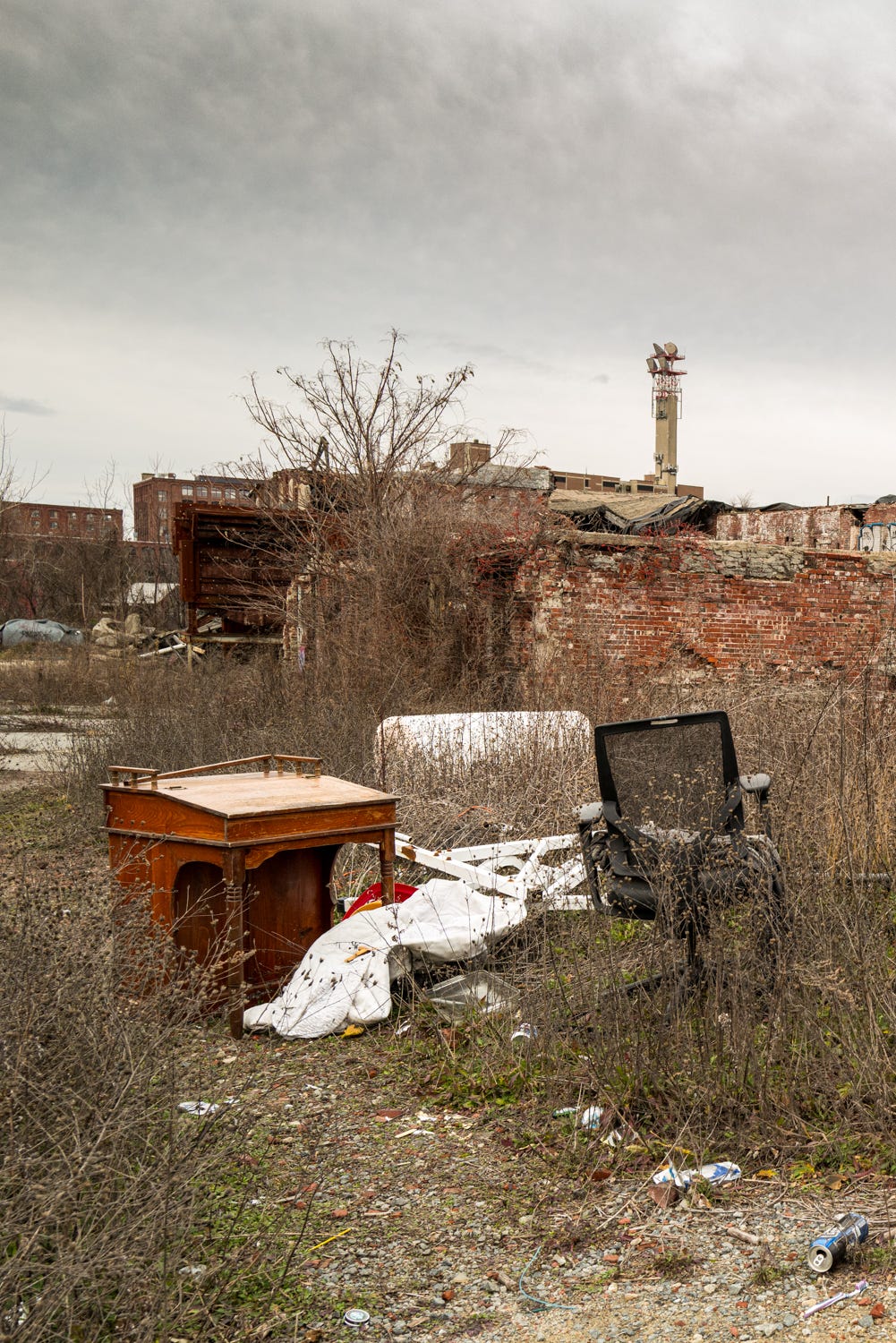
The first time I drove into Lawrence Massachusetts and saw the wonderful, old redbrick mills that lined its streets and the banks of the Merrimack River, I knew this town was going to be an absolute treasure trove of compelling images. There are relatively few of the old mill towns around New England in which the demise of the region’s industrial era is so starkly visible as it is in Lawrence. In many of them, this decline feels more like a long and gentle erosion - like the way that running water and the passage of time will gradually soften the edges of the stone along a river bank. The economic decline in Lawrence feels much more sudden and catastrophic - as if the mills had fallen silent and their workers had abruptly walked off the job, never to return. The town conveys the feeling of a great exodus that was so sudden and unexpected that there was no time even to plan what was to be done with all of the empty spaces that it left behind.
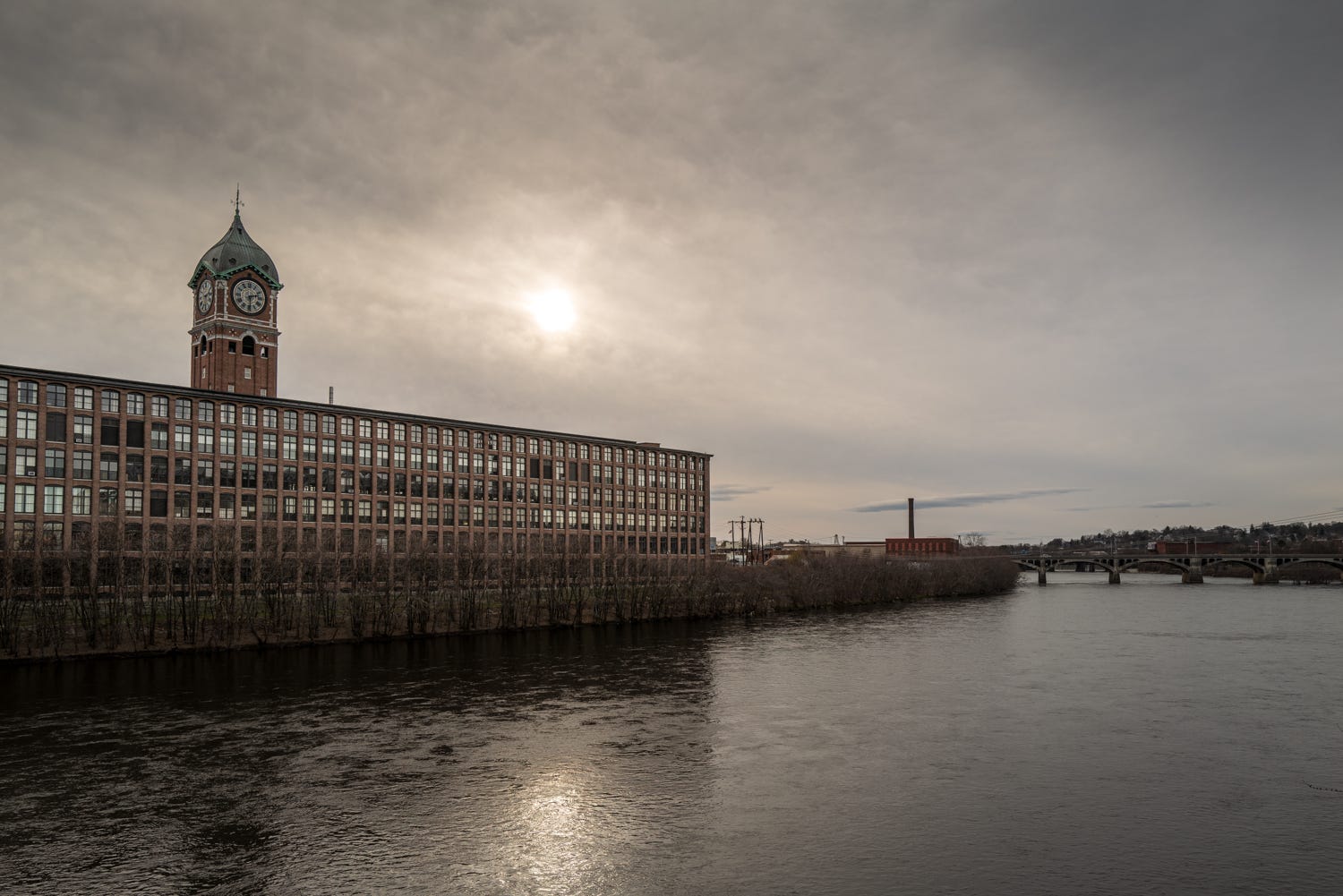
One of the great New England mill towns that sprung up along the region’s rich network of inland waterways, Lawrence was founded by coastal settlers who migrated inland along the Merrimack river in the middle of the 17th century. The river provided not only the means to transport goods and materials, but later when it was dammed in the 1840s, also provided power to the mills and factories that would be built along its banks during the industrialization of the region.
For all of its economic benefits however, industrialization could often be a mixed blessing for the workers who flocked to the the region for the jobs it brought with it. A mill collapse in 1860 killed 145 workers, and conditions in the town’s mills and factories were often terrible, prompting waves of strikes and walk-outs. After WWII, Lawrence briefly flourished as center for wool processing, but with the decline of this industry, the town fell upon hard times from which it has struggled to recover, to this day.
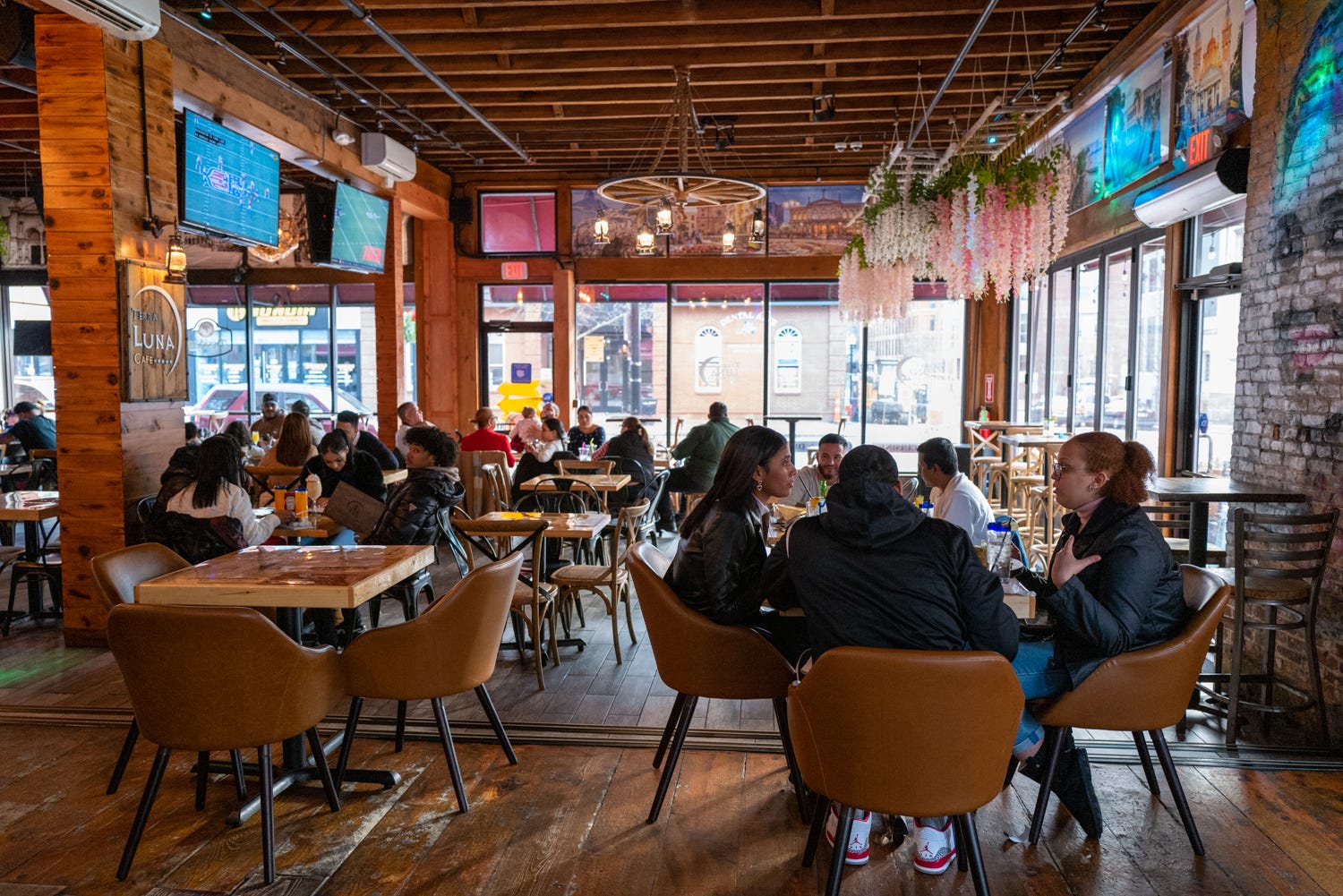
Known as the "Immigrant City," Lawrence has benefited from successive waves of immigrants coming to work in its mills including Irish, French Canadians, English, and German workers. Later on, starting in the early 1900s, Italians, Poles, Lithuanians, and Syrians began arriving. A significant wave of Puerto Rican and Dominican immigrants starting in the second half of the 20th century, has created a largely Hispanic population that gives Lawrence a strong Latino vibe - a result of the warmth and vibrancy of the rich culture that they brought with them. When you walk around downtown Lawrence, it is striking how many wonderful Latino restaurants, bars, and coffee shops there are, all of which bring some much needed vitality and life to a town that has endured more than its fair share of hardship. And even today, the flow of immigrants into the town continues, with the latest arrivals coming from Vietnam and Cambodia, adding their own unique cultural influences to the melting pot,
Like all of the neglected mill towns featured in this project, Lawrence is very much a place of incredible potential. It has a relatively young population whose energy you feel could be tapped to bring renewed prosperity. With a little bit of luck, and some good choices, it would be great to see the town freed from the shackles of its former dependence on the economic modalities of a bygone era.
At the time of writing in 2026, many of the derelict and abandoned sites depicted in these photographs have already been demolished and cleared to make way for what will hopefully be the redevelopment and renaissance of the town center.
© Gordon Webster
Using the link below, you can browse a curated set of images from Lawrence MA in a gallery at my website, from which you can purchase photographic artwork in multiple formats. If this work resonates with you and you haven’t already done so, please consider subscribing to get future project updates.

