


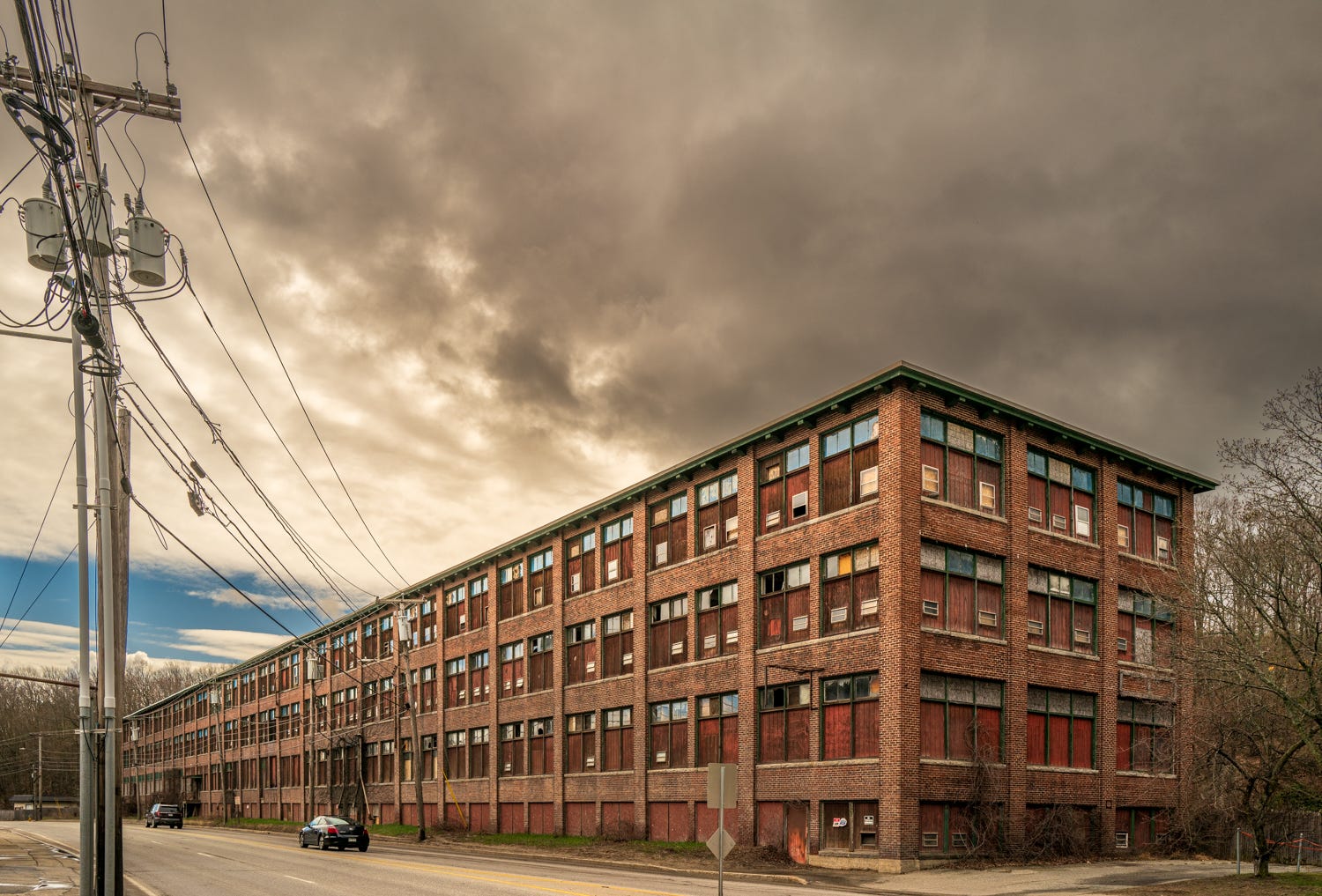
Originally incorporated in the late 18th century, Lewiston became a hub for manufacturing and industry as a result of its location next to the Androscoggin River and the Lewiston Falls. Later on, subsequent to its incorporation as a city in the mid-19th century, it would be twinned with the city of Auburn on the opposite bank of the river, with whom it shares infrastructure and transportation.
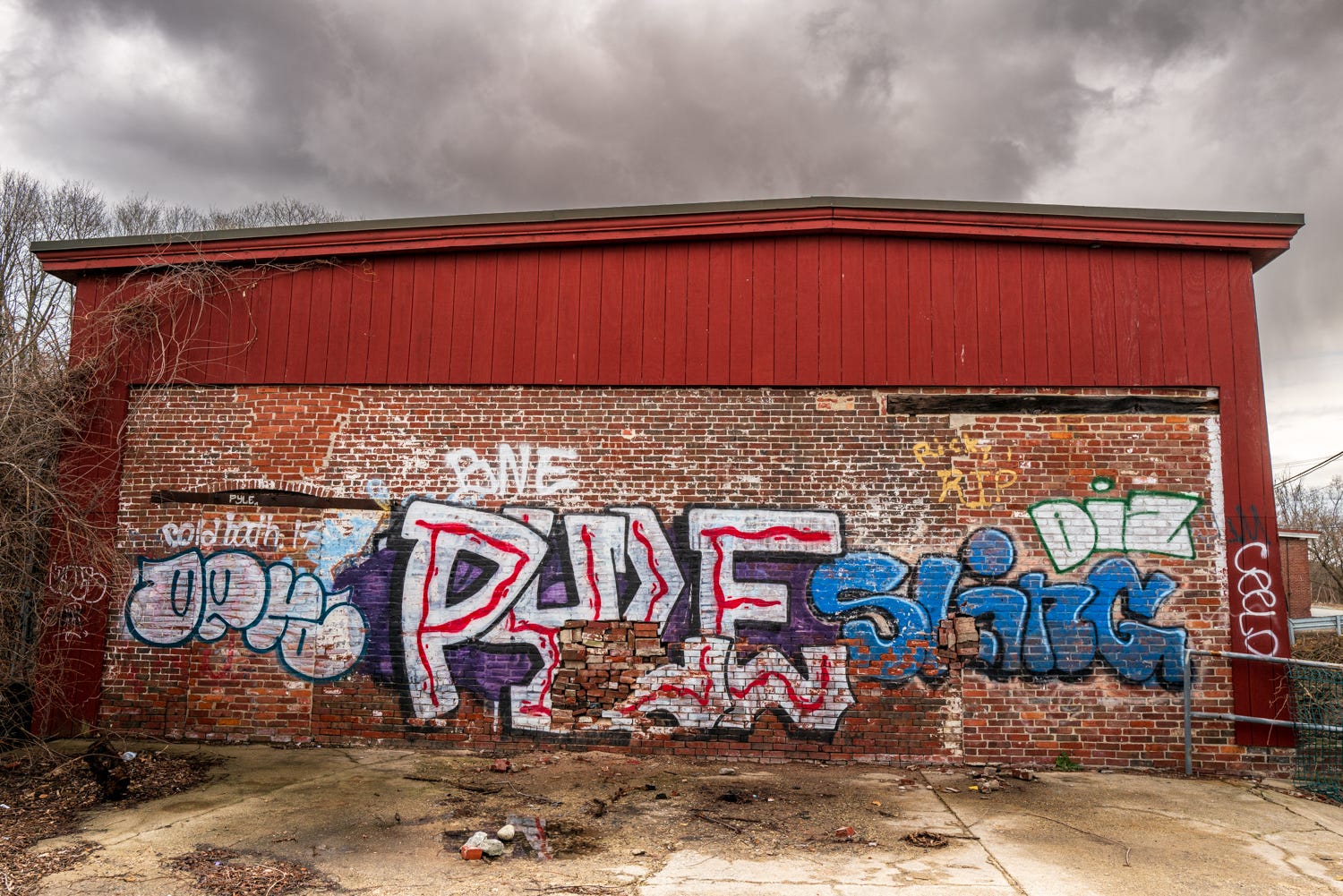
The home of Bates College, Lewiston has a kind of dual identity as a college town, that is also a somewhat rough-around-the-edges, working class town. You can feel this dichotomy as you walk around the town, with some neighborhoods having the kind of trendy shops, cafes, and coffee bars that you would expect in a college town, while other neighborhoods exhibit the poverty and neglect that you would associate with the economic decline that the town has seen since its former glory days as a textile and manufacturing hub.
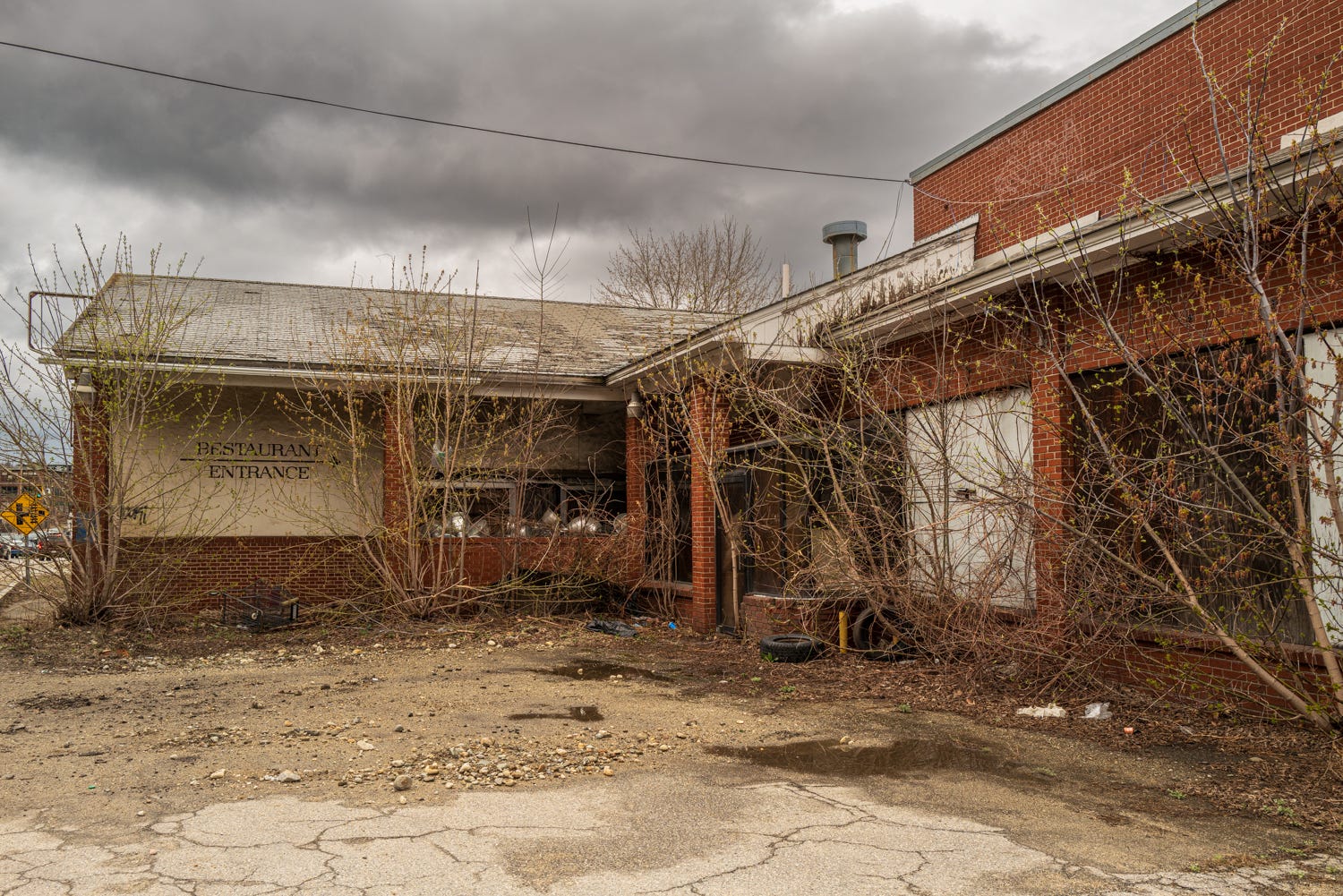
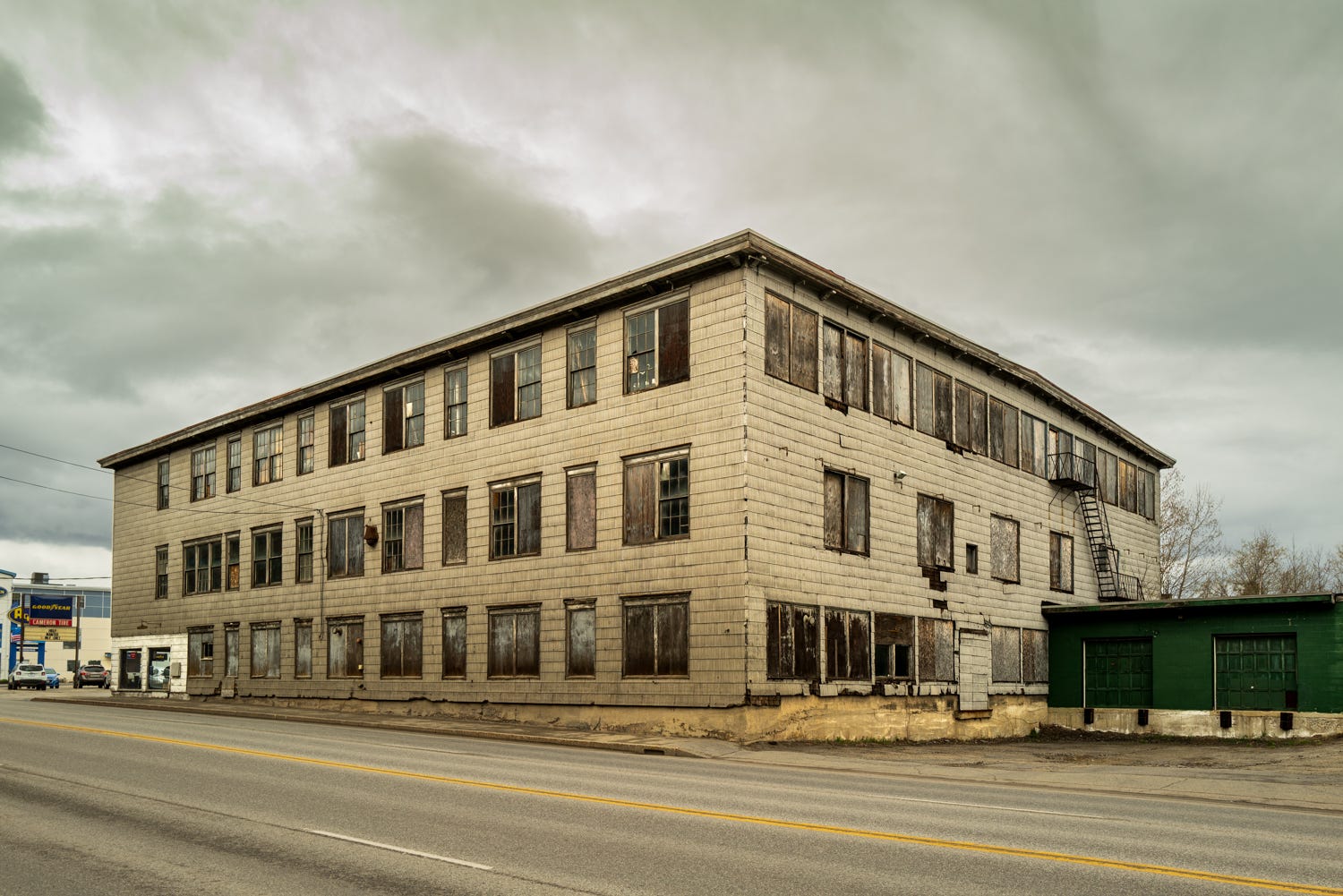
After World War I, with declining profits from the textile industry that had been so crucial to the town’s prosperity and growth, the local economy started to decline. Many of the town’s jobs moved away as new technologies and methods of transportation eroded the economic advantages of being located on a major inland waterway, and by the 1950s, the town’s mills started to close. With the decline in the town’s economy, came a decline in the population starting in the 1970s, and gradually accelerating through the 1990s. Lewiston’s population peaked at about 40,000 in 1970, declined relatively rapidly throughout the remainder of the 20th century, but has since recovered to about 39,000 as of 2025.
© Gordon Webster
Using the link below, you can browse a curated set of images from Lewiston ME in a gallery at my website, from which you can purchase photographic artwork in multiple formats. If this work resonates with you and you haven’t already done so, please consider subscribing to get future project updates.

