


My name is Gordon Webster. I am a photographer based in New England, where I divide my time between Cambridge, MA and Hartland VT. This Substack is the home for my project Another New England - an ongoing photographic exploration of New England’s abandoned and post-industrial landscapes. If after reading this article, you follow the link at the end, you can read more about my motivation for this project - kind of an artist’s statement if you like, about why this subject matter appeals to me so much as a photographer.
All of the images from this project are available to purchase in a variety of formats including beautiful, gallery-quality prints that will last a lifetime. The articles on this site include links to galleries where you will find the images used in the articles, as well as a selection of other photographs captured at the various locations I have visited in all 6 New England states. These images are only available through my site, and in many cases, depict abandoned spaces that no longer exist as a result of redevelopment.
So if these images of New England’s abandoned and post-industrial spaces resonate with you, you can support my work by purchasing from my galleries or even just buying me a coffee.
Before we go on - in this age of AI slop, it’s worth stating here that all of my writing and photography is 100% authentic, human-created content - real people, real places, real things. I truly hope you enjoy it as much as I enjoy creating it!
And so, to this project …
For most people, New England is synonymous with idyllic towns set in a picturesque landscape of mountains, rivers, and forests, all decked in fall foliage or soft, powdery snow. This picture postcard portrayal of the region is amplified in virtually all forms of print and digital media and to be fair it is entirely warranted. As somebody who has called the region home for more than twenty-five years I have to admit to a certain amount of bias here, but for me, New England is definitely one of the most beautiful parts of America.
There is however a side of New England that is much less well known to visitors of the region, and even those of us who live here can easily pass it by without giving it a second thought. As one of the earliest settled regions of the United States, New England has a long and rich history of industry and commerce, much of which initially developed around its coastal harbors and inland waterways, and was later further expanded by the railways. From the 18th century through the first half of the 20th century, a significant fraction of New England commerce involved the kind of heavy industry that we would associate with the Industrial Revolution - textiles, manufacturing, shipbuilding, and so on. The region’s abundant inland waterways would play a central role in this industrial expansion - water providing both the means to transport goods and materials efficiently and economically, and the power to drive the mills and machinery needed for manufacturing. Little wonder then that much of New England’s industrial growth was concentrated around these natural water resources upon which this kind of commerce so heavily depended.
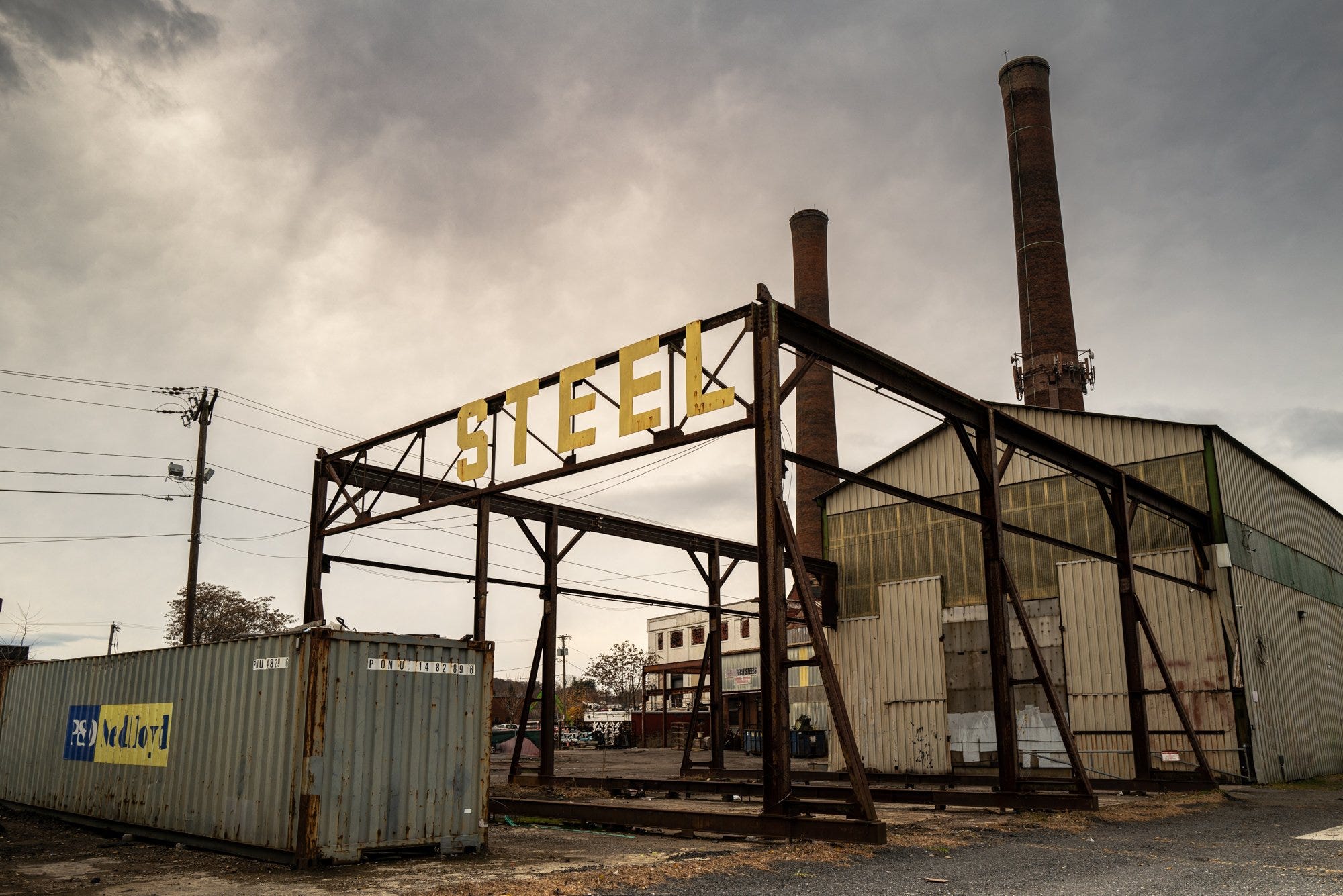
But as the world changed and technology advanced, a lot of these industries were eventually either consolidated, transplanted to other regions and countries where labor and materials were cheaper, or they became largely obsolete. Technologies like the internal combustion engine and electricity, along with the expansion of roads and railways, would eventually erode the economic advantages of locating industries next to inland waterways. In time, even the railways would fall into decline. Since their peak at 429,000 miles of track in the U.S. in 1929, the U.S. has lost 63% of its railroads and currently operates about 140,000 miles of track.
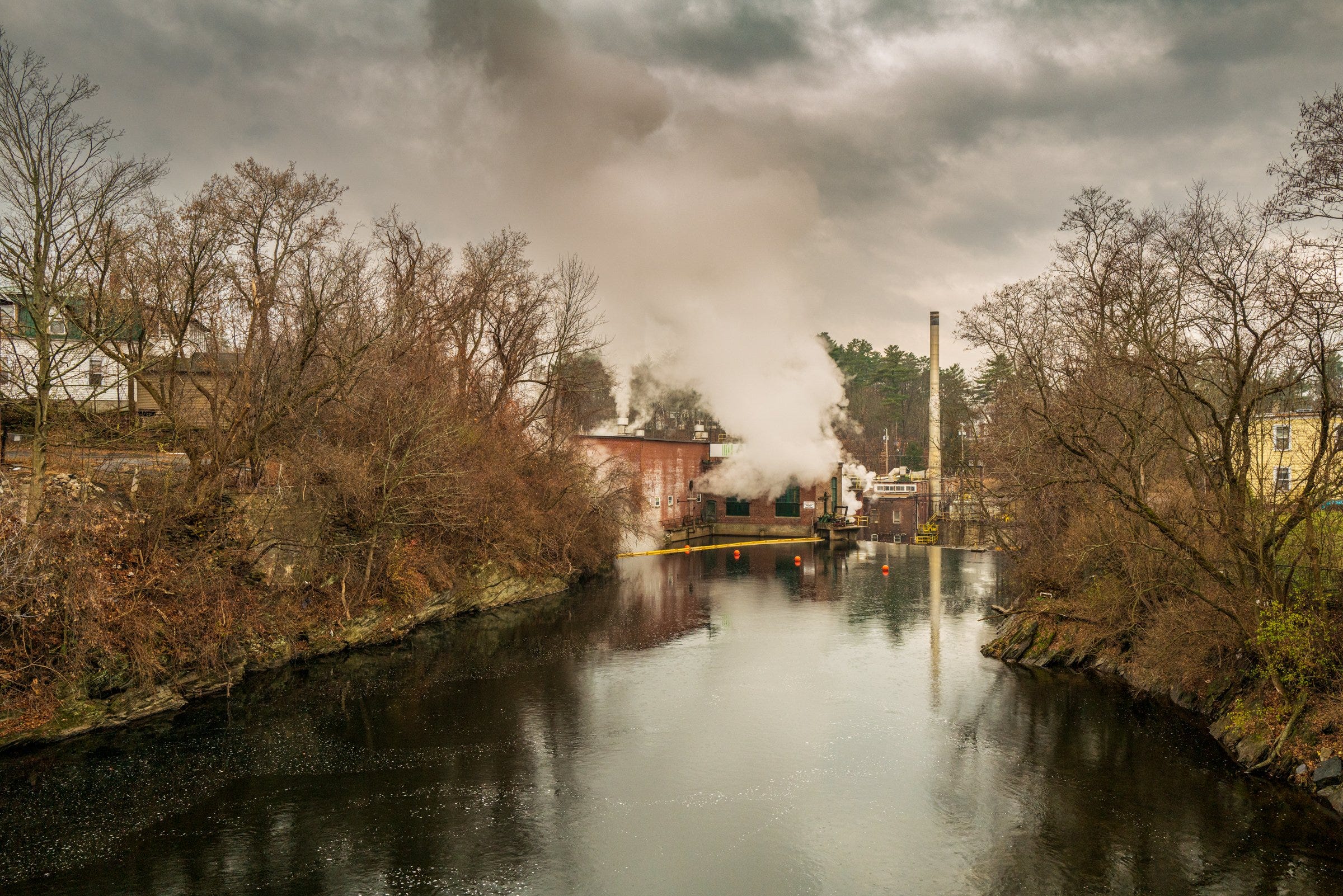
The final nail in the coffin was in some sense the burgeoning prosperity of the U.S. itself, as it underwent the familiar trajectory of economic structural transformation that developing nations seem to follow - a phase of de-industrialization accompanied by a rise in the outsourcing of manufacturing to places with lower labor costs.
This decline of the great industrial era in America has dramatically impacted many of the once prosperous mill towns of New England. The loss of industries like textile manufacturing that were once powerful drivers of local economies, have left behind a visible legacy on the landscape, particularly in these mill towns, many of which have now fallen into neglect and decay. And it’s not only the abandoned structures and land left behind by the closure of these businesses that is apparent. The visible decline of these towns is further exacerbated by the lack of opportunity and poverty that this economic decline leaves in its wake. Businesses struggle to stay open in communities where money is tight, and when they end up abandoned and boarded up, it is to the detriment of the other businesses around them. Many residential properties in these towns suffer a similar fate as a declining and economically disadvantaged population reduces the demand for housing.
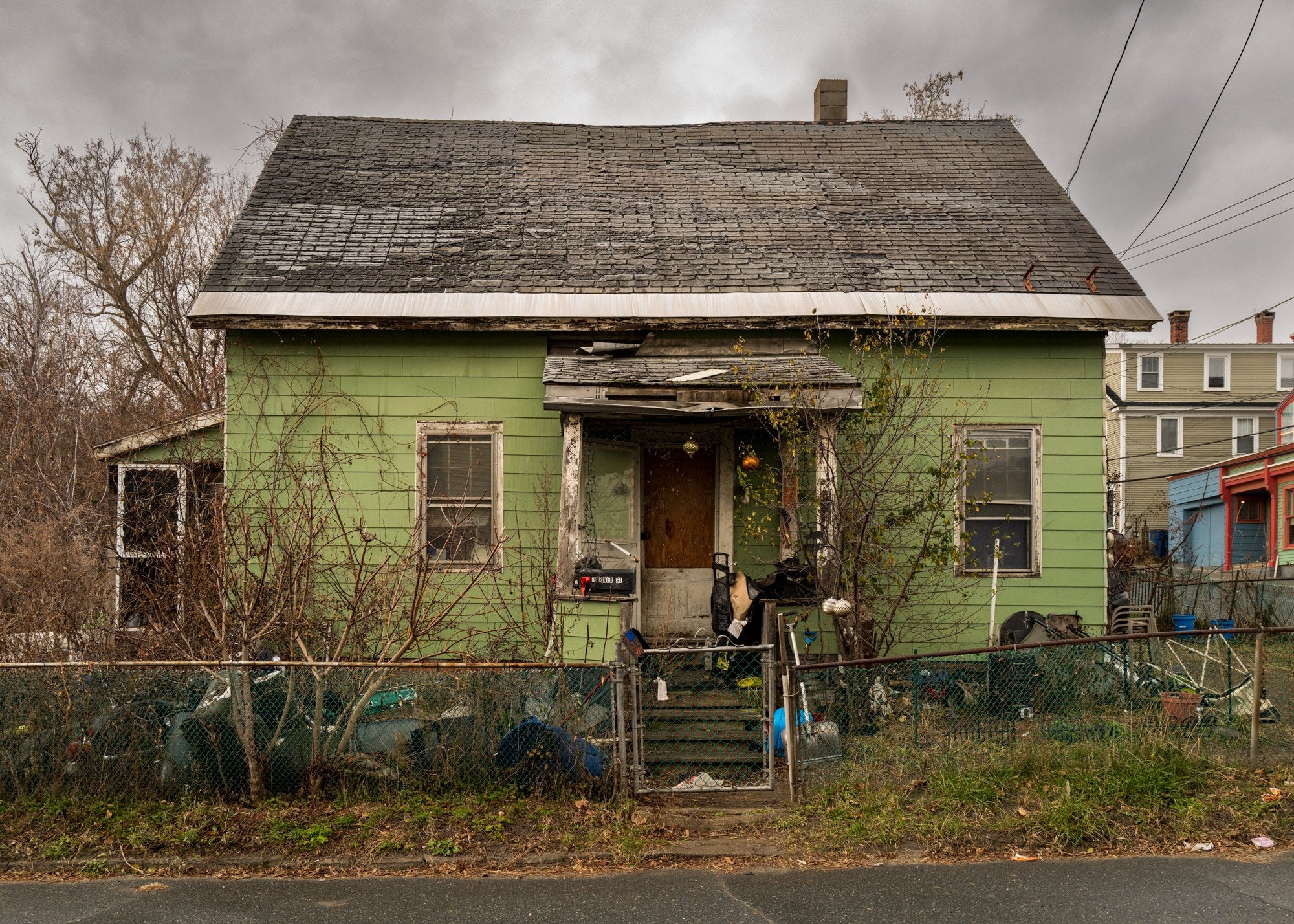
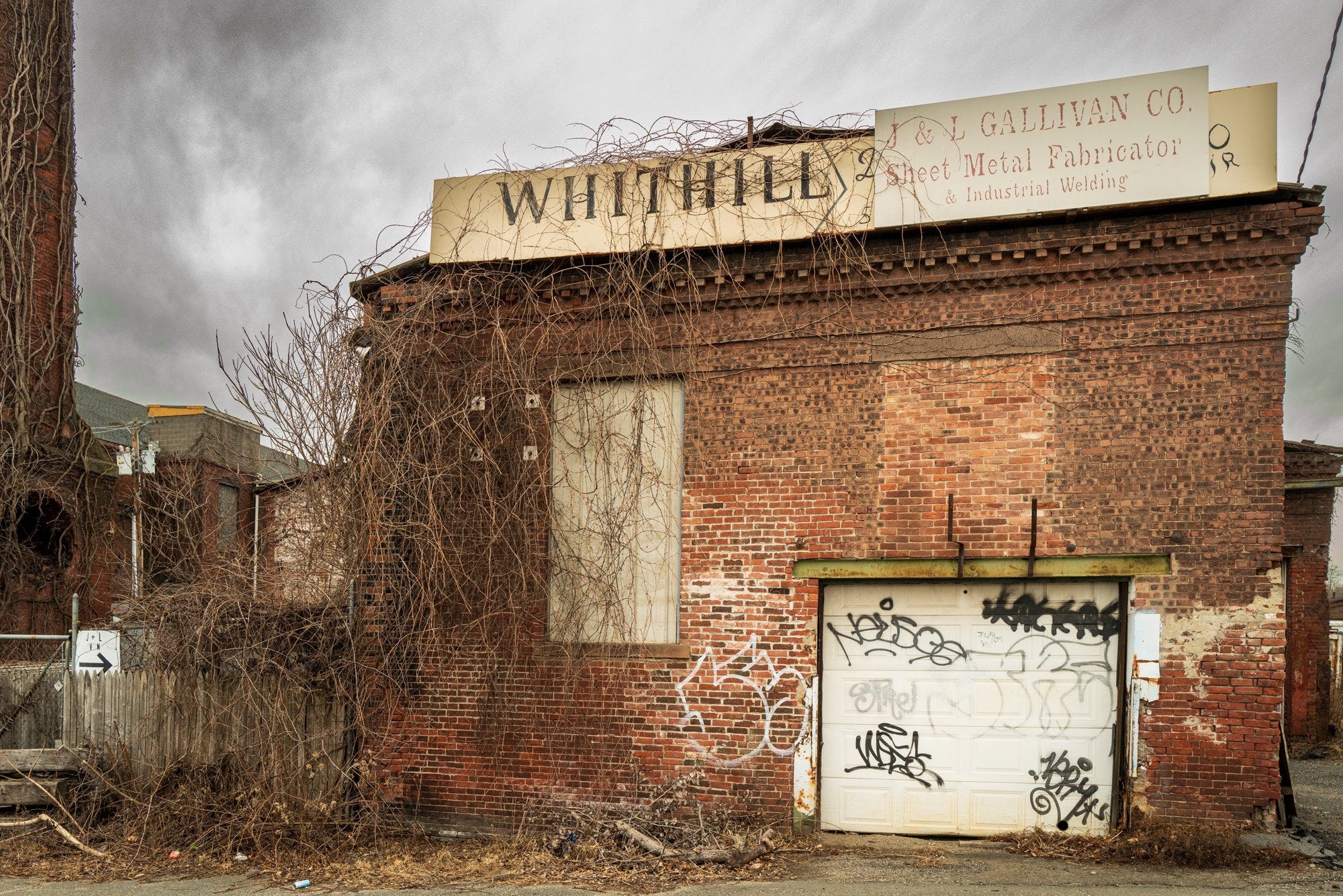
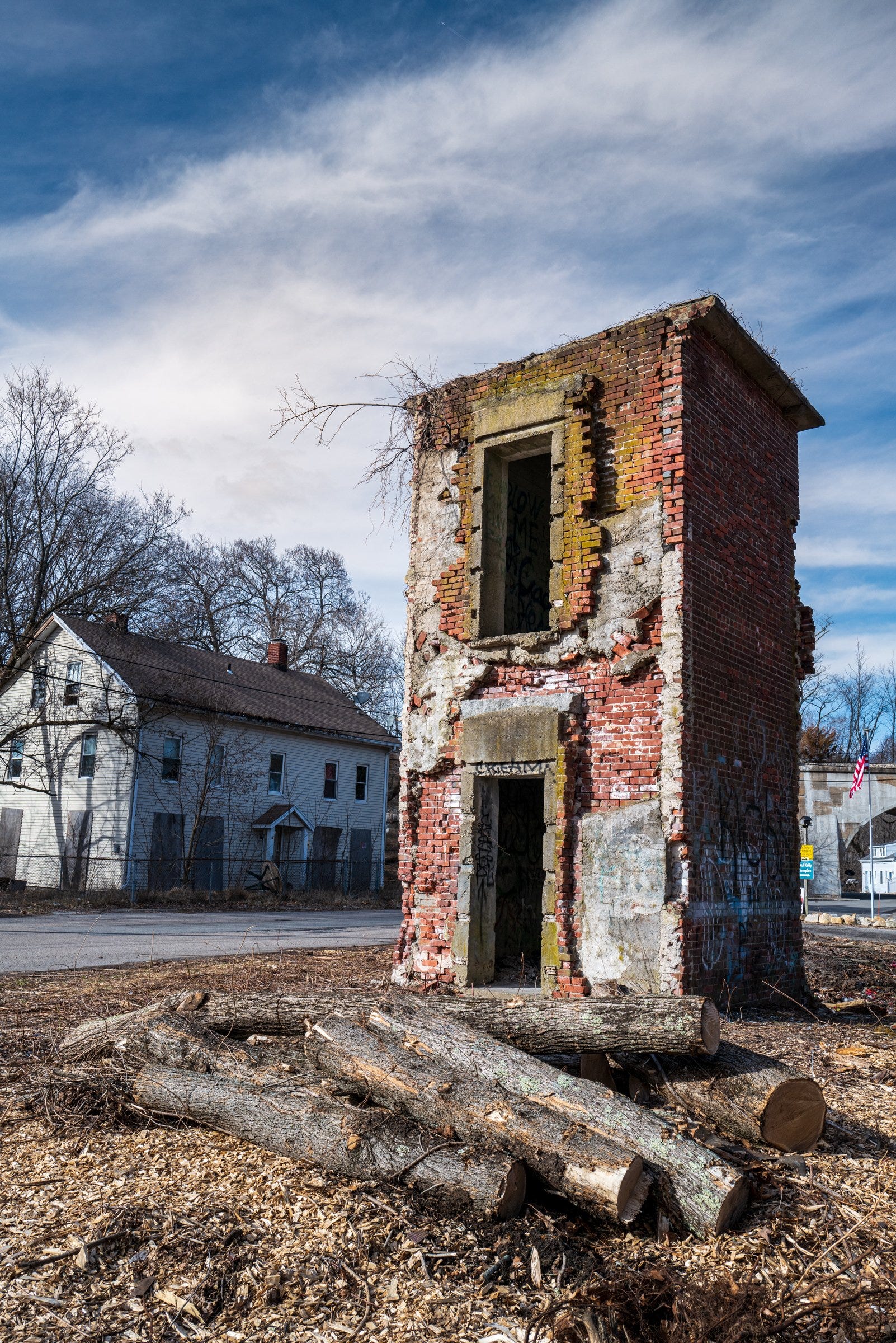
Another New England is a project that I started in 2022, and on which I am currently still working. My goal is to capture the often haunting, subtle, and melancholy beauty of these places that have been left behind by New England’s industrial past. Looking beyond the surface impressions of desolation and decay in these post-industrial spaces, there is truly a kind of forlorn beauty in the colors, textures, and forms that have been created by years of weathering, and by the gradual reclamation of these spaces by nature herself. The red brick walls of an abandoned mill taken over by vines. Wild flowers sprouting through the cracks in stone walls or the concrete flagstones of an old road that hasn’t seen any traffic in decades. In many of these places there’s a very real sense of their once-vibrant past, of a heyday that has come and gone, leaving a sense of loss in its wake. Beyond the aesthetic aspect of this work, this project also has an industrial archaeology and conservation component to it - recording as it does, a visible legacy of New England’s industrial past that in some places is already starting to disappear.
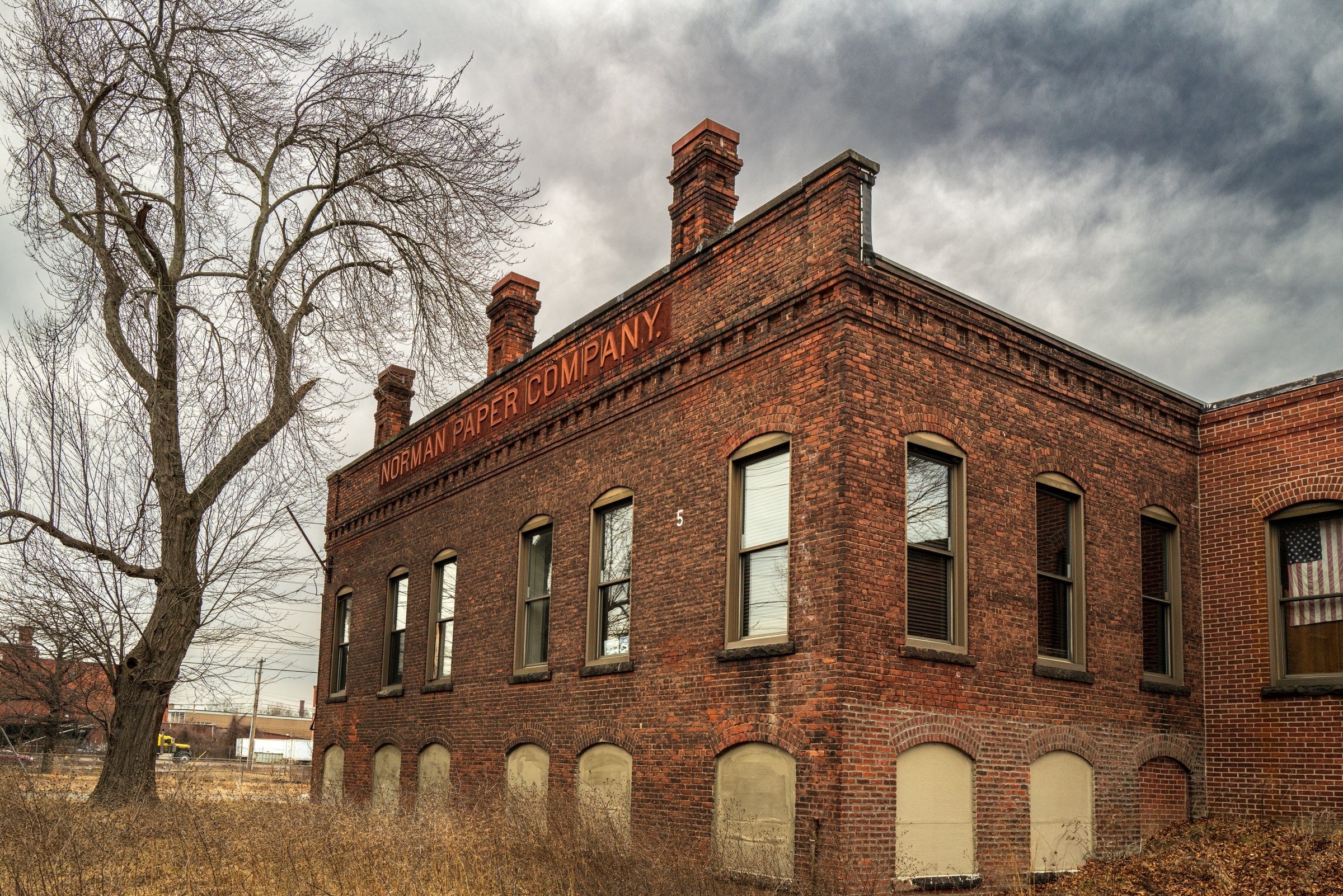
Recently, more and more of New England’s neglected mill towns are starting to experience something of a revival as their old structures and public spaces are repurposed for modern civic life. Ironically, this might be due (at least in part) to the kind of new technologies that drove the industrial obsolescence in the first place. The rapid expansion of the internet over the last three decades has now made it possible for many jobs to be performed from virtually anywhere that has a decent internet service. This connectivity along with the advent of technologies such as computer-driven manufacturing, also allows smaller enterprises to relocate to less expensive areas that are often more remote and further from the main commercial centers - while still being able to function as efficient and competitive businesses.
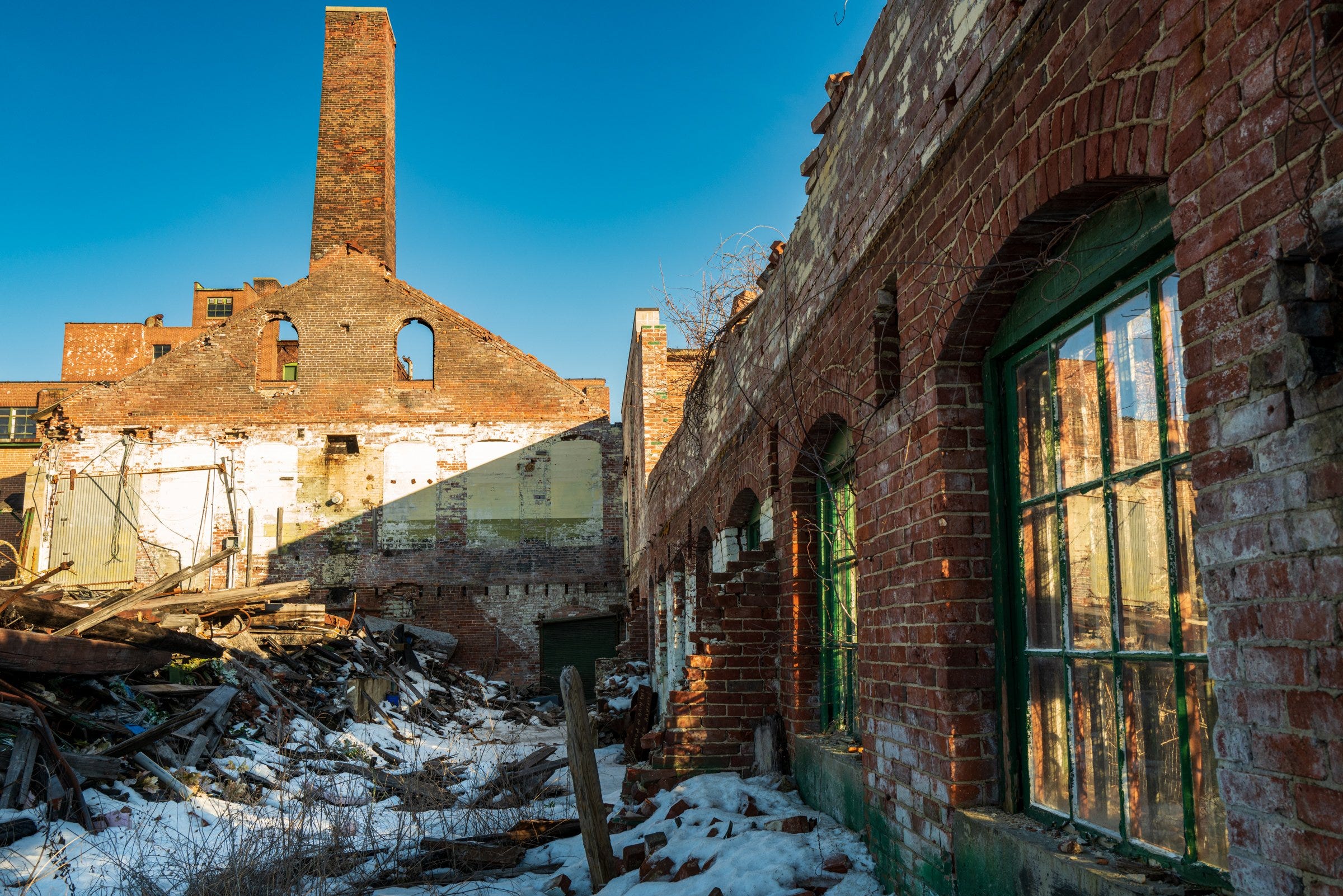
While the last century or so has seen a rise in the dominance of the coastal cities of the U.S., the rural, river valley regions in which many of these neglected mill towns are located, offer a potentially vast and largely untapped resource for the U.S. - the large rural tracts of New England being no exception. In fact there are some wonderful initiatives in place to nurture this potential, including the Center on Rural Innovation based in my other hometown of Hartland Vermont. There is already a sense that change is in the air for some of these neglected New England communities, and the early signs of this are visible in towns like Manchester, New Hampshire, and White River Junction, Vermont.
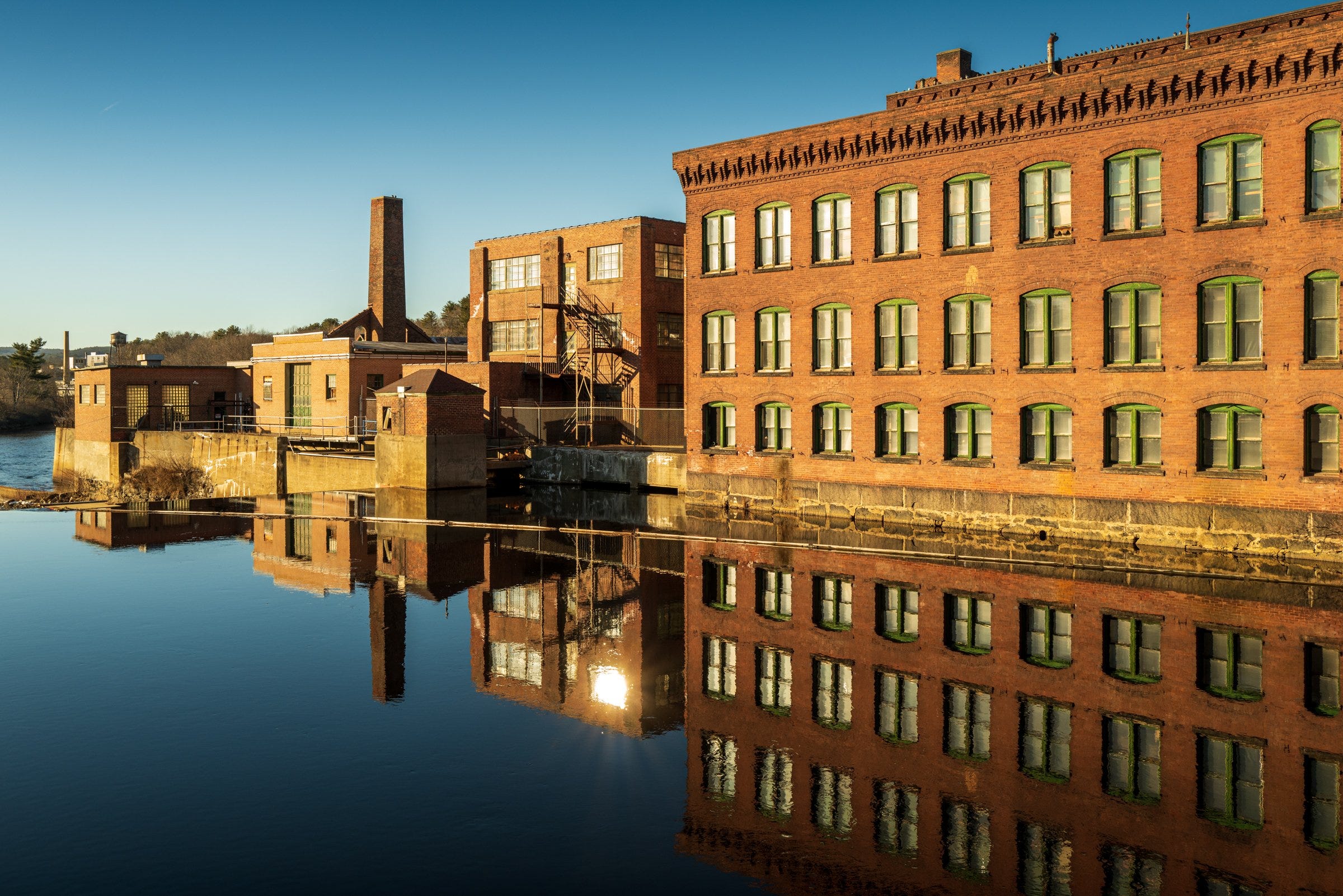
But in New England as in many other regions of the U.S., some serious investment of time, money, and creative effort in these economically disadvantaged areas will be needed to pull them out of stagnation and re-integrate them into more vibrant local economies. But where there is hope, great things can happen - and there is definitely hope. Such efforts are of course, subject to the vicissitudes of America’s economy and politics, but the eventual disappearance of these forgotten spaces seems inevitable one way or another - either through urban renewal, or through the inexorable march of nature gradually erasing the imprint of man’s industrial past on the New England landscape.
I also created a short video that gives a very brief introduction to the project, and a little biographical detail about myself and my photography.
So I promised at the beginning of this article, that I would provide you with a suggestion for an article to visit next, in which I explain my motivation for this project and why I’m so drawn to the particular kind of beauty that I feel these abandoned places have. If this sounds interesting, check out the article The Subtle Beauty of Abandoned Places.
© 2026, Gordon Webster
Want to see more of this other side of New England? Consider subscribing, purchasing my work, or even just buying me a coffee. It all helps support my work.
