


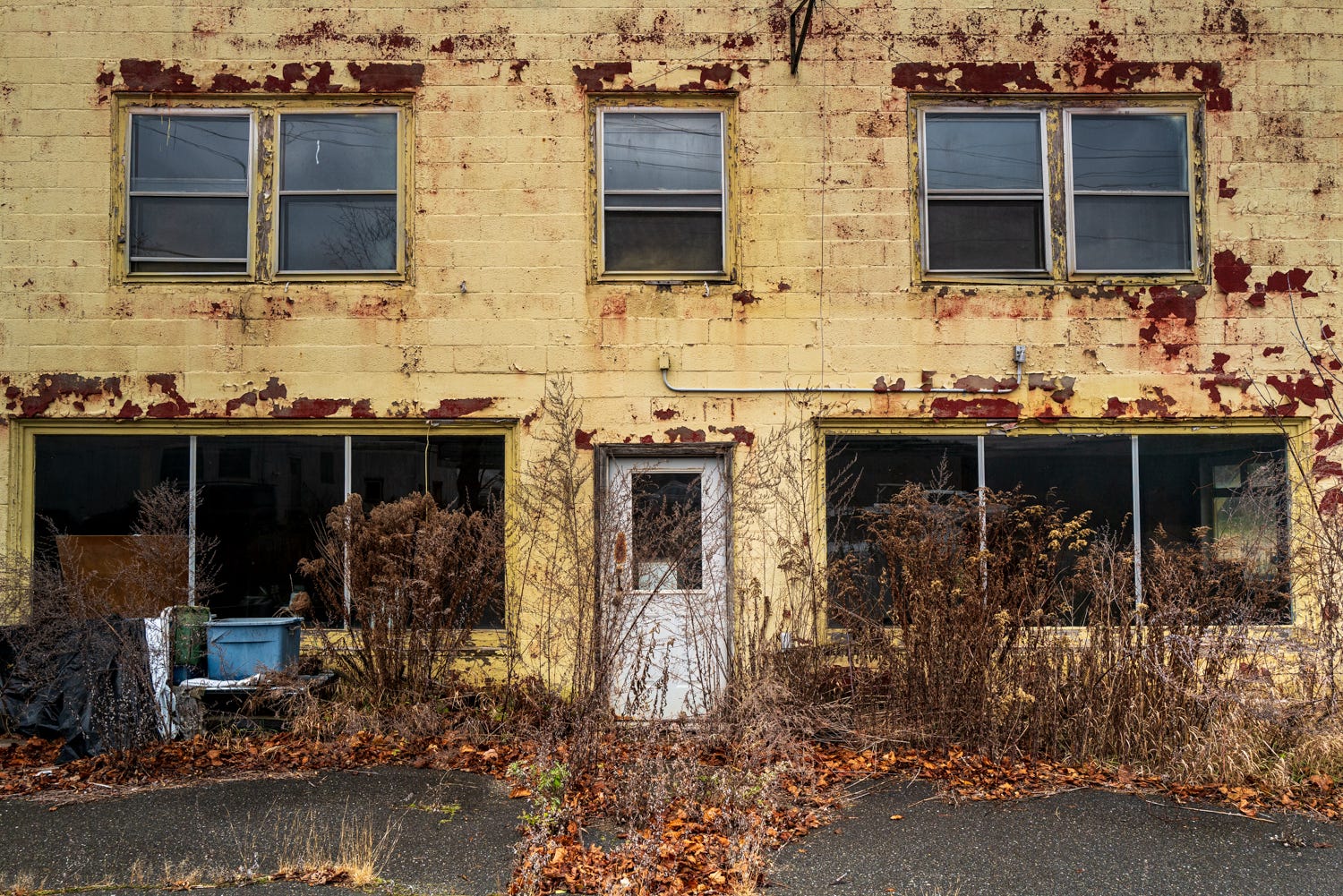
It was fitting that this project should start in Windsor, Vermont, since of all the places that I have visited in the six New England states, this one is the closest to our Vermont home. My wife and I married in Hartland which is actually a town within Windsor County, of which the nearby town of Woodstock is the county seat. In stark contrast to the kind of places that I have photographed for this project, Woodstock is one of the most picturesque towns, not only in New England, but anywhere in the United States. Woodstock truly embodies the kind of picture postcard vision of New England that I referred to in my introduction to this project; a town center like something from a Norman Rockwell painting, with quaint shops and cozy cafés. A town whose picture-perfect streets are decked in sparkling lights, decorations, and a fresh dusting of snow at Christmas time, all nestled within a scenic valley of mountains and forests.
Nearby Windsor Vermont may share some of the the surrounding scenery, but the vibe downtown is very different.
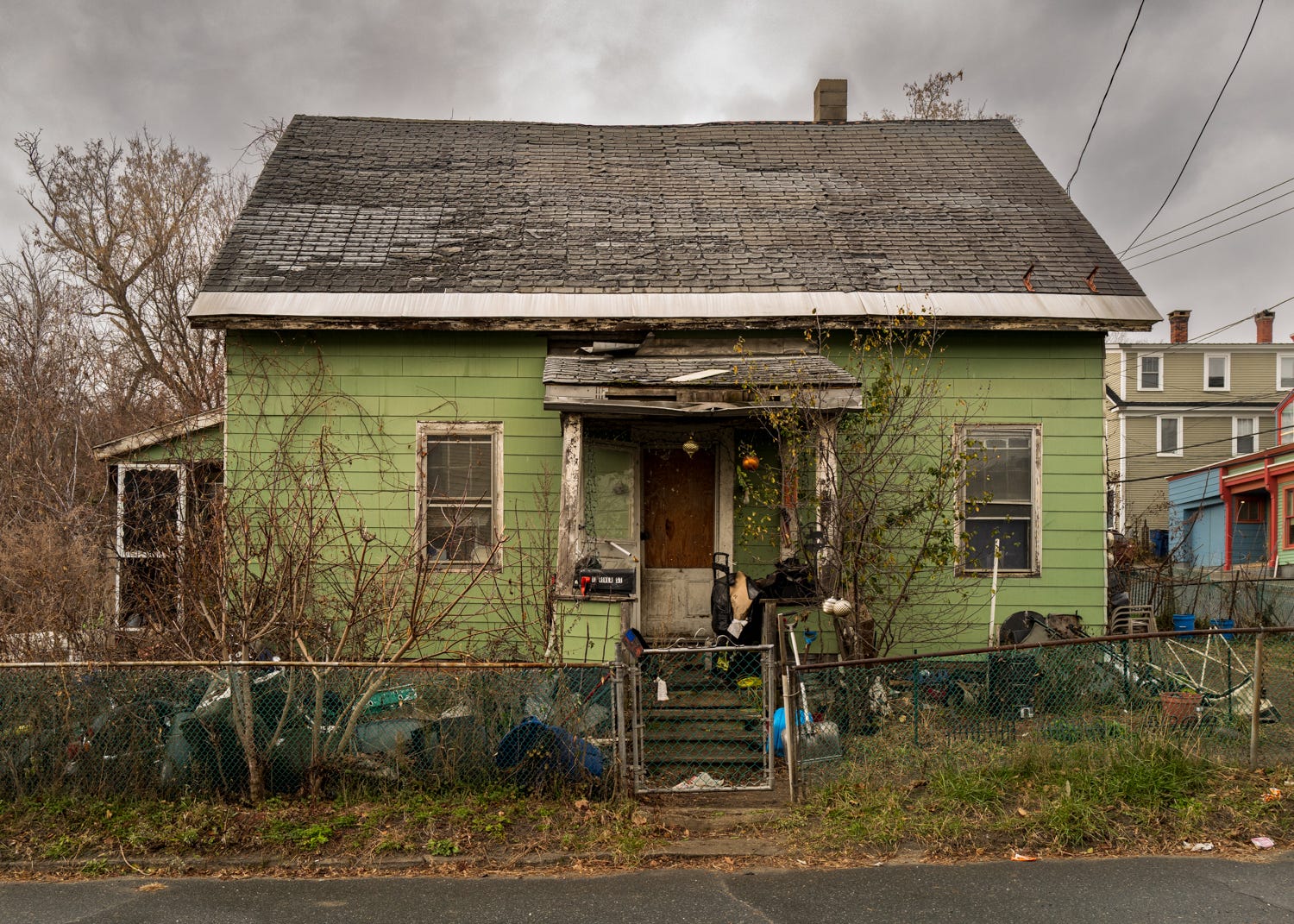
The town of Windsor is known as the “Birthplace of Vermont” since it is where the constitution of Vermont was signed, creating the Vermont Republic, a sovereign state that was independent from Great Britain. In 1791, as the new state of Vermont, this republic joined the United States. Located on the banks of the Connecticut River, Windsor was ideally situated to become an important commercial hub, which is was from the 18th century through the first half of the twentieth century. Windsor was also the first town in Vermont to break ground for the railroad. The war years of the 1940s were a time of prosperity for the town, with more than a 1,000 of the townspeople employed by the Cone-Blanchard Machine Company manufacturing machines for the aerospace and automotive industries, and a similar number working at the local Goodyear Tire and Rubber Company.
With the closure of these factories in the second half of the twentieth century however, the town’s fortunes declined. With rising unemployment came a decline in the town’s population, which peaked at about 4,500 people in 1960, and had lost almost a quarter of its population according to the 2020 census.
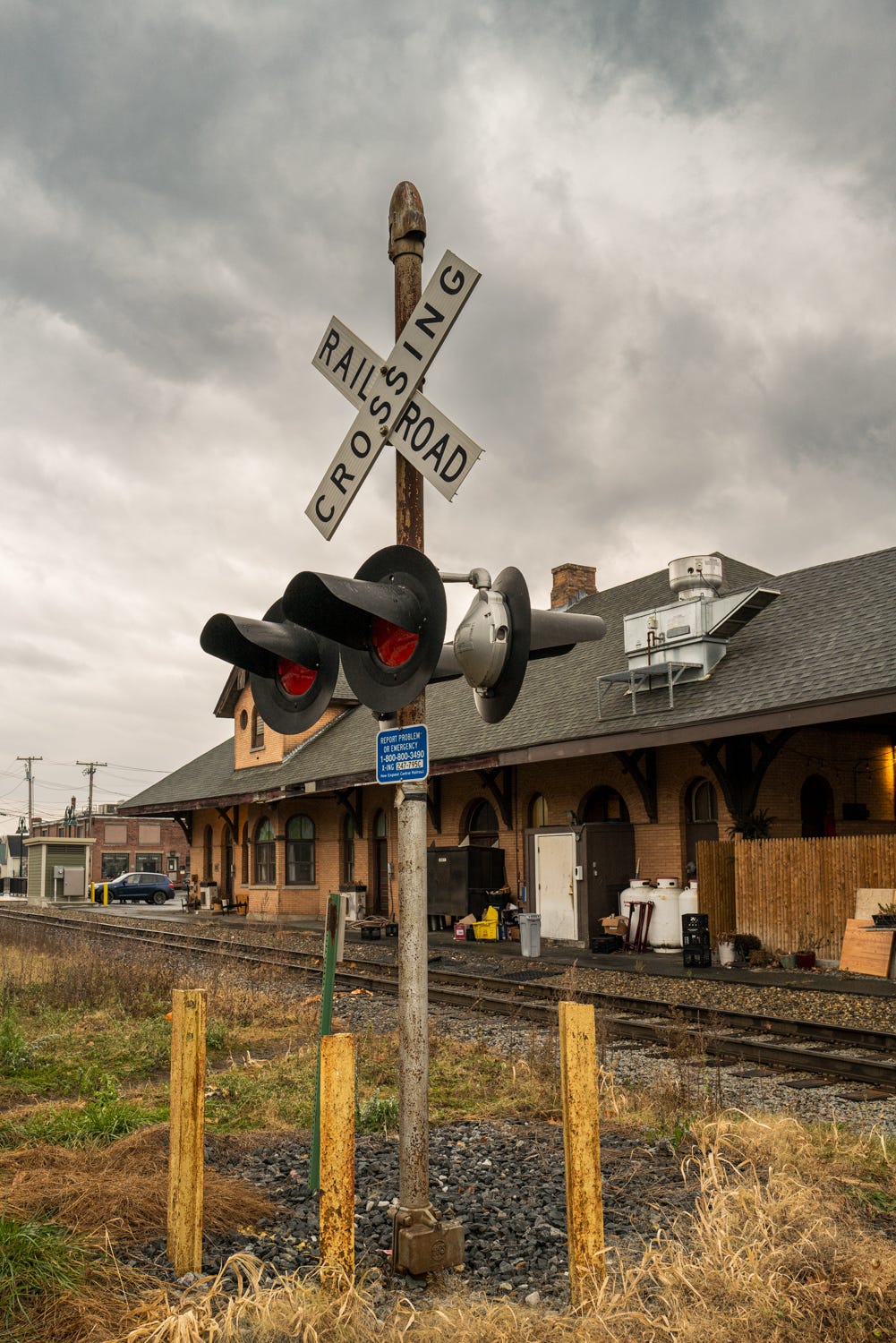
Like many of the once great industrial towns in New England, you can get a sense of Windsor’s former glory days from some of the structures still remaining in the town, such as the old Robbins and Lawrence Armory (now the American Precision Museum) and the Old Constitution House on Main Street, where the delegates of the Vermont Republic met on July 8, 1777, to adopt the first constitution in America to prohibit adult slavery and grant universal male suffrage.
And although it has it has had its share of problems as a result of its declining economic fortunes and population, Windsor still has a lot going for it, including a wonderful old railroad station now repurposed as a restaurant, one of New England’s iconic covered bridges, as well as one of the region’s few surviving railcar diners.
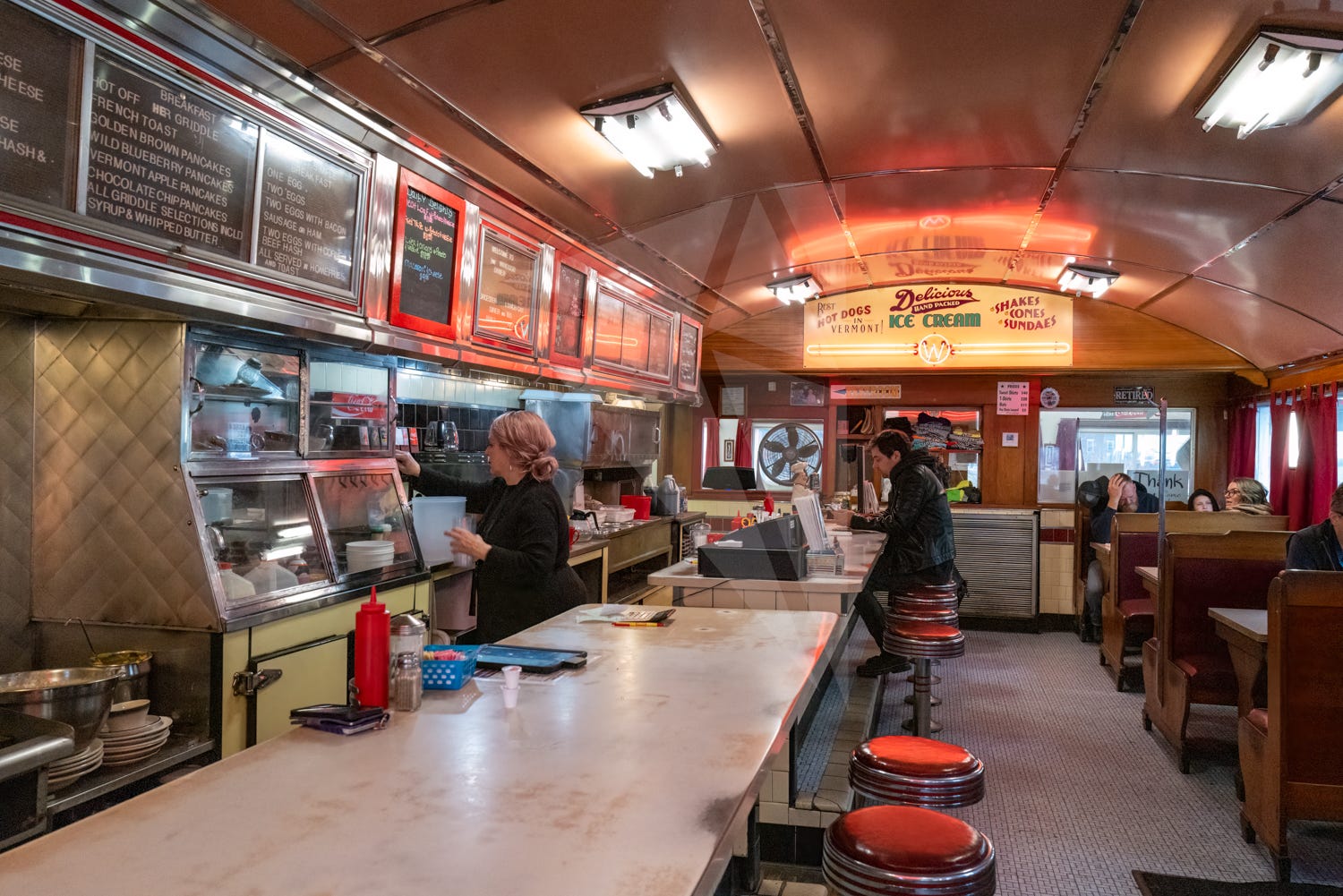
Using the link below, you can browse a curated set of images from Windsor VT in a gallery at my website, from which you can purchase photographic artwork in multiple formats. If this work resonates with you and you haven’t already done so, please consider subscribing to get future project updates.

© Gordon Webster

2 of my childhood friends lived in Windsor, and their mom still does. Sad that after factories closed it became a povertyville.