


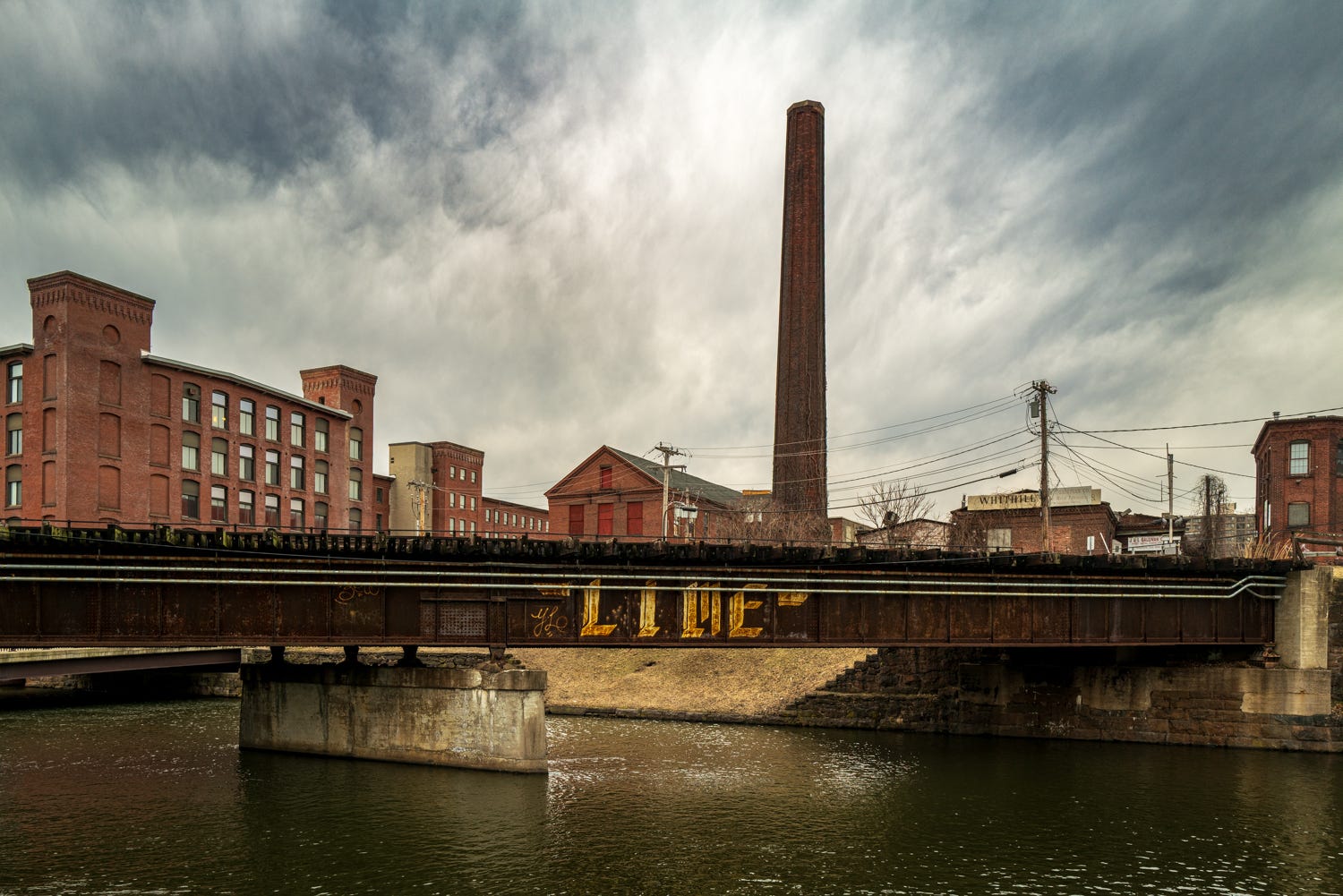
Of all the places I have traveled to for this project, none can match the sheer scale and degree of urban decay that is visible today in Holyoke Massachusetts. This is largely due to the fact that at its peak, Holyoke was one of the greatest manufacturing centers of the post-agrarian industrialization of New England - a planned city built around the wealth of potential power that could be tapped from the Connecticut River’s 57ft drop at South Hadley Falls. For efficiency, the city was even organized on a grid pattern like Manhattan’s. At its peak in the early decades of the twentieth century, it was home to more than 60,000 people and had more millionaires per capita than anywhere else in the U.S.
But when the mighty fall, they tend to fall hard.
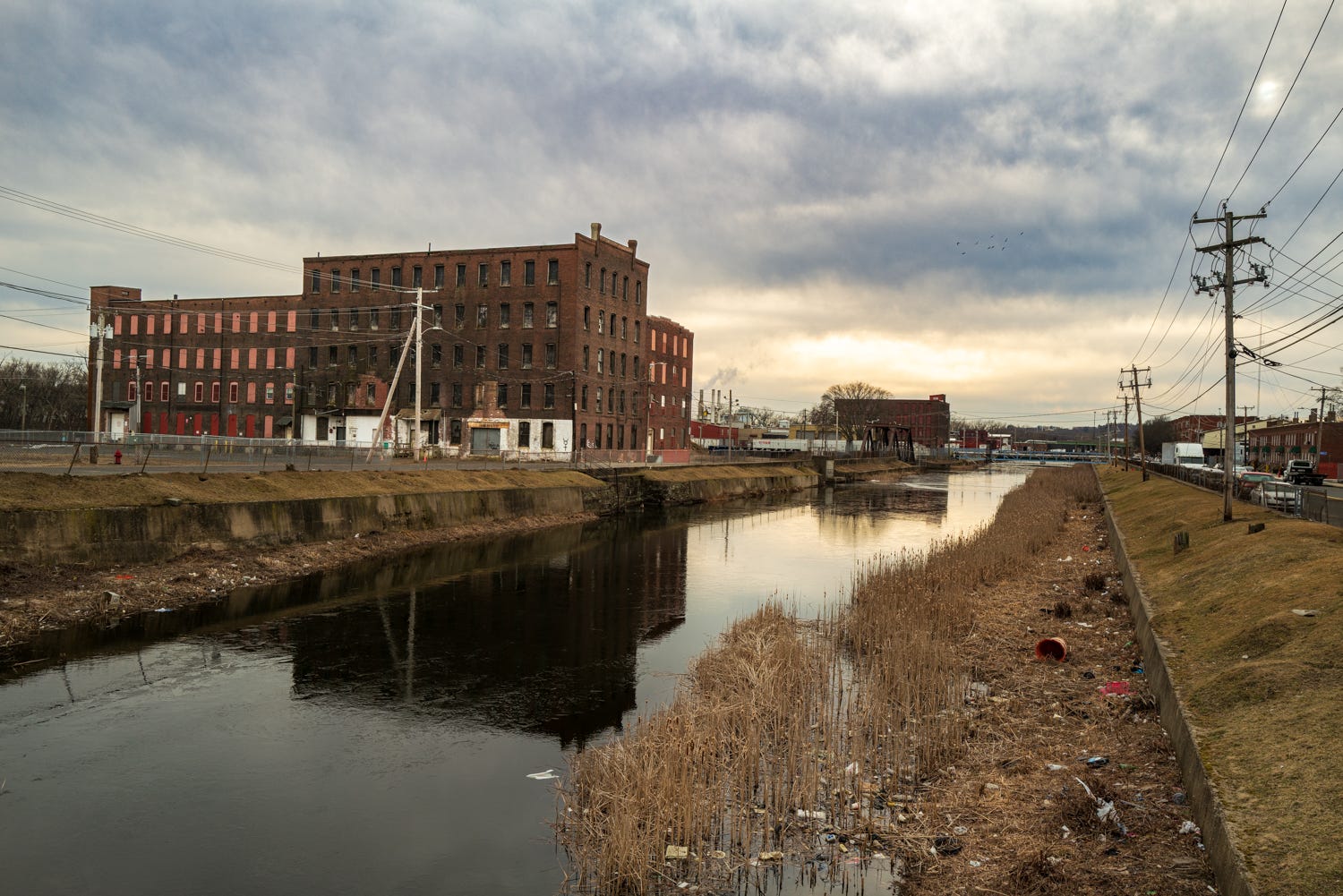
Once the potential for harnessing the energy of the Connecticut River had been recognized, the city transformed from an agrarian settlement into an industrial town built around the production of textiles. With the advent of the Civil War and the disruption to cotton supplies that accompanied it, the focus of Holyoke’s industrial output shifted to paper production. Incorporated as city in 1873, at its peak, it was home to more than 25 paper mills. By the turn of the 20th century Holyoke produced an estimated 80% of all the writing paper used in the United States and earned the name “The Paper City” as a result.
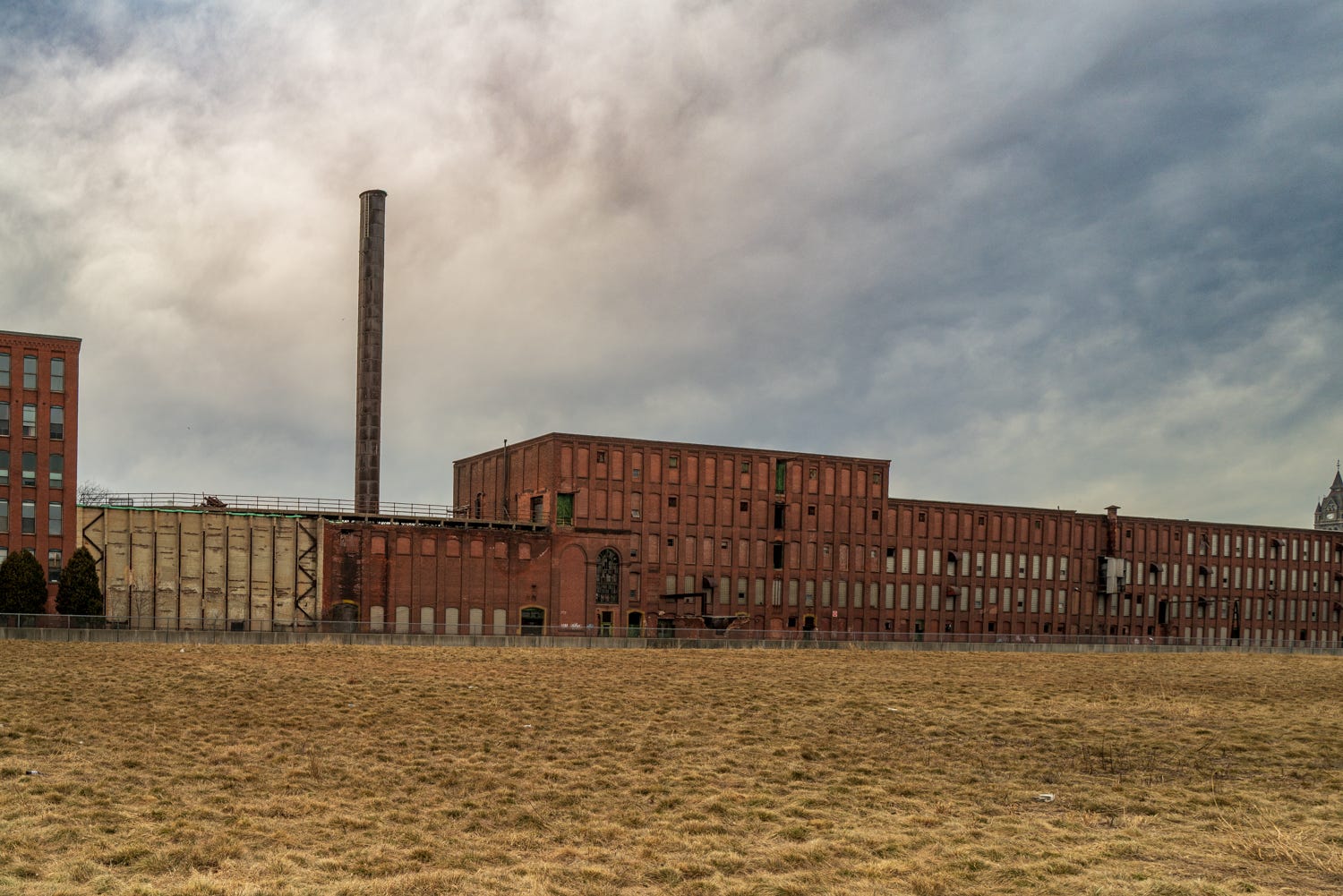
But the subsequent chapter of the story of Holyoke is an all too familiar one amongst the mill towns of New England. A series of setbacks that started with the Great Depression, gradually ate away at the business model of the paper industry - consolidation, competition from other regions and the general commoditization of paper, the high costs of production and maintenance of aging infrastructure, and perhaps most devastating of all - a shift to digital media in the last two or three decades, that saw paper demand in some sectors plummet by as much as 90%.
The population of Holyoke has almost halved since its peak in the 1920s, and as I have witnessed in other mill towns such as Lawrence MA, it looked to me as if the city’s decline was so sudden and catastrophic, that it left no time even to figure out what to do with all of the empty spaces that it left behind it. In some of of the industrial zones of the city where there are no residential neighborhoods, so little traffic passes that the roads have grass and weeds growing through the cracks in the asphalt. There were areas where I could stand in the middle of the road to take pictures of the surrounding buildings, since there were literally no other vehicles using the street. In fact, I don’t think I have ever seen a city with so many empty and decaying structures, and sprawling acres of unused land.
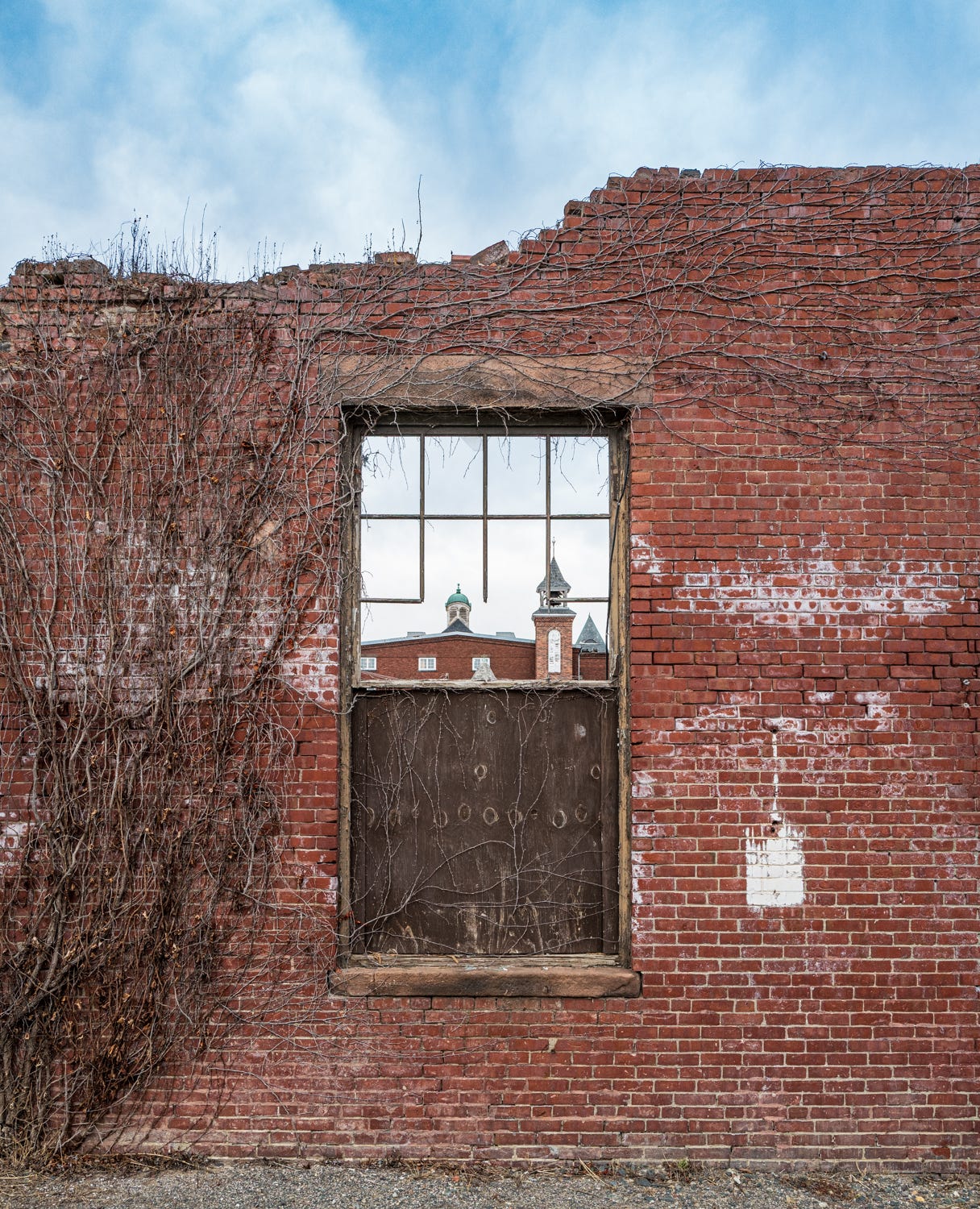
This story of post-industrial decline is a familiar one, but like many of the other great mill towns I have visited around New England, Holyoke may be down but it is certainly not out. This is a city that on more than one occasion, has proved itself capable of innovation and even reinvention. This is the city that adapted to the cotton shortages of the Civil War years by pivoting to paper production. It is the city where volleyball was invented in 1895 and is still home to the Volleyball Hall of Fame. It is the city that now has the lowest energy costs anywhere in the Commonwealth of Massachusetts as a result of its new green energy initiatives - harnessing the power of the Connecticut River that once drove its mills, to generate cheap, clean hydroelectric power.
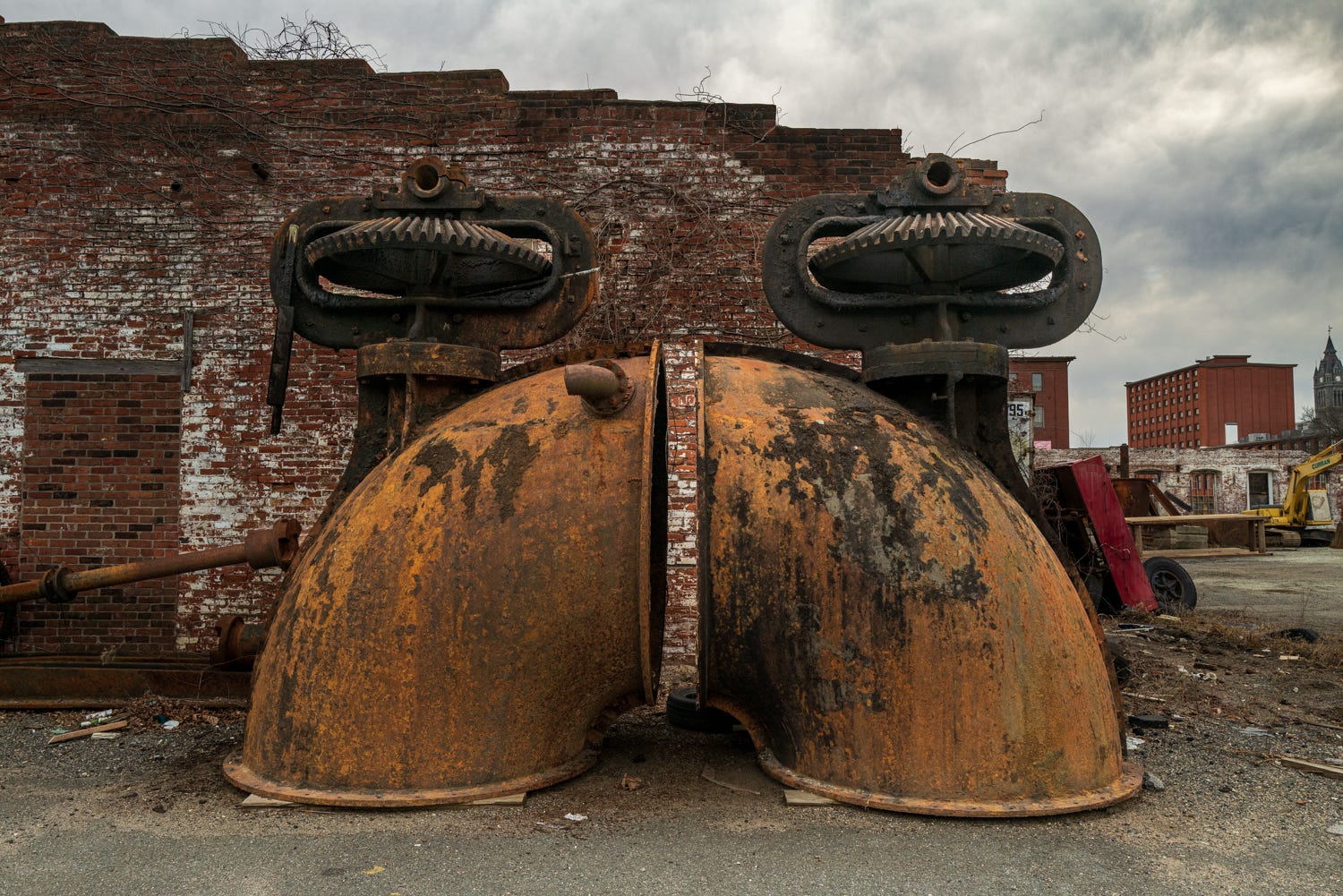
In 2012, Holyoke would leverage this new source of clean energy to pivot once more into a new and very 21st century area of economic activity - computers. With the opening of the Massachusetts Green High Performance Computing Center powered by locally generated hydroelectricity, Holyoke is establishing itself as a supercomputer center that can provide the kind of high-end computing resources needed to service the educational and commercial research sectors that have made Massachusetts a modern economic powerhouse.
© Gordon Webster
Using the link below, you can browse a curated set of images from Holyoke MA in a gallery at my website, from which you can purchase photographic artwork in multiple formats. If this work resonates with you and you haven’t already done so, please consider subscribing to get future project updates.

